
Understanding Smart Irrigation Controllers


Smart irrigation controllers represent an innovative evolution in garden management, allowing for enhanced control over outdoor living spaces. Unlike traditional systems that operate on fixed schedules, these advanced controllers utilize real-time data from irrigation sensors, adjusting water delivery based on current weather conditions, moisture levels in the soil, and plant requirements. For a deeper dive into this technology, check out our full guide on how weather-based irrigation works. This adaptive approach not only optimizes watering efficiency but also ensures that gardens receive the precise amount of water needed without waste.
One of the primary advantages of smart irrigation controllers is their contribution to water conservation. By leveraging technology to monitor conditions, these systems minimize unnecessary water usage, which is crucial in today’s environmentally conscious society. As climate conditions fluctuate and water scarcity becomes an increasing concern, implementing smart irrigation systems can significantly reduce outdoor water consumption, promoting sustainable gardening practices.
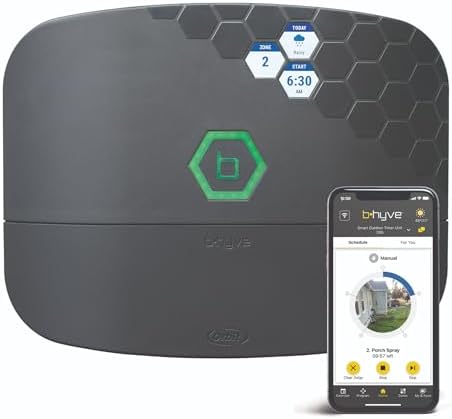

In addition to water savings, these controllers often feature user-friendly interfaces that allow gardeners to program schedules, monitor usage, and make adjustments via mobile applications. Many of them are compatible with voice-activated assistants, further simplifying the management of outdoor spaces. Typical features include remote control capabilities, weather forecasts integration, and alerts for system issues or maintenance needs, all aimed at enhancing the user experience and the health of the garden.
Moreover, smart irrigation controllers assess local weather patterns, allowing for predictive watering. For instance, if rain is forecasted, the system can postpone watering schedules, further conserving water. As gardens evolve and climates change, the adaptability of these controllers becomes an essential tool in modern gardening, ensuring that outdoor living areas flourish while making efficient use of resources.
Key Features to Look For
When selecting a smart irrigation controller for your garden, there are several essential features that should significantly influence your decision. One of the paramount attributes to look for is Wi-Fi connectivity. This feature allows homeowners to connect the irrigation controllers to their home network, enabling remote access and control via smartphones or tablets. You can learn how to connect smart irrigation controllers to WiFi in minutes using our simple guide. The convenience of controlling watering schedules from anywhere provides greater flexibility in outdoor living management.
Another crucial aspect to consider is app compatibility. A user-friendly application enables seamless integration with your irrigation sensors and provides real-time data about your garden’s watering needs. Ensure that the irrigation controller can synchronize with existing devices or systems, enhancing its overall functionality. This compatibility can also extend to weather tracking apps that adjust watering schedules based on current weather conditions, promoting optimal water usage.
Integration with irrigation sensors is also vital. Smart irrigation controllers potentially work alongside soil moisture sensors and rain sensors. These technologies detect environmental conditions, helping the system to make data-driven decisions regarding when and how much to water. If you are adding hardware, see our guide on how to install a soil moisture sensor for better watering results.
Seasonal adjustments are an essential feature worth noting as well. The best irrigation controllers allow you to modify settings based on seasonal changes, which is crucial for maintaining the health of different plants throughout the year. In addition, programmable watering schedules are paramount. They enable you to customize watering times and frequencies according to the specific needs of your garden, ensuring that each plant receives appropriate hydration without dependence on manual intervention.
Technical Specifications & Buyer Insights
To achieve professional-grade results and maximize E-E-A-T (Experience, Expertise, Authoritativeness, and Trustworthiness), it is essential to understand the underlying technology of your irrigation solution. When evaluating high-end models, look for WaterSense Certification, an EPA standard that ensures the device meets strict water-efficiency criteria and may qualify you for local utility rebates. You can find more information about these standards on the official EPA WaterSense irrigation page.
Advanced controllers utilize Evapotranspiration (ET) Data—a calculation of water loss from the soil and plant surfaces—to adjust watering cycles with scientific precision. This ensures that your Solenoid Valves only open when the Root Zone actually requires hydration. Deep Dive: Hyper-Local Weather Intelligence—While basic controllers use national weather data, premium models integrate with Personal Weather Stations (PWS). This allows the controller to react to a rainstorm happening specifically at your street address, rather than relying on data from a distant airport, ensuring maximum precision in water savings. For a deeper scientific understanding of how plants and soils interact with water, organizations like the American Society of Agricultural and Biological Engineers (ASABE) provide extensive research and technical standards.
Furthermore, consider a system that supports Cycle and Soak technology. This method prevents runoff by delivering water in short bursts, allowing the soil to reach its Field Capacity effectively. For those retrofitting traditional irrigation systems, check for compatibility with your existing Common Wire setup and ensure the unit features Non-Volatile Memory to protect your custom schedules during power outages. For complex landscapes, ensure the controller supports Multi-Zone Management to handle different Hydrozones, such as high-traffic lawns versus drought-tolerant xeriscaping.
Smart Home Ecosystem Integration
For modern homeowners, a smart irrigation controller is more than just a timer; it is a vital component of a connected home ecosystem. Most top-tier models now offer seamless integration with voice assistants like Amazon Alexa and Google Assistant, allowing you to trigger watering cycles with simple voice commands like, “Alexa, water the backyard for 10 minutes.” For users invested in the Apple ecosystem, selecting a controller with Apple HomeKit support ensures that your garden management is unified within the Home app alongside your smart lights and security cameras. This level of integration not only adds convenience but also allows for advanced automation, such as turning off the sprinklers if a smart outdoor motion sensor detects activity.
Quick Comparison: Top Smart Controllers
| Model | Connectivity | Max Zones | Best For |
|---|---|---|---|
| Rachio 3 | Wi-Fi | 16 | Overall Performance |
| Orbit B-hyve | Wi-Fi / Bluetooth | 16 | Budget Friendly |
| RainMachine Mini-8 | Wi-Fi | 8 | Local Control |
| Eve Aqua | Bluetooth / Thread | 1 | Small Gardens |
| Wyze Sprinkler | Wi-Fi | 8 | Entry Level |
Top 10 Smart Irrigation Controllers
Smart irrigation controllers are essential tools for optimizing the watering process in gardens and outdoor living spaces. These devices help conserve water while ensuring plants receive the right amount of moisture. In this section, we present a curated list of the ten best smart irrigation controllers currently available, along with their standout features, pros, and cons.
1. Rachio 3 Smart Sprinkler Controller
Rachio 3 is renowned for its user-friendly interface and advanced weather intelligence. With integrated Wi-Fi, this irrigation controller allows for remote management through a mobile app, adjusting schedules based on real-time weather data. Pros include its easy installation and compatibility with various irrigation sensors. For specific setup questions, you can visit the Rachio Support Center.
- DITCH THE DIAL – Upgrade to smart irrigation with the free Rachio app for precise, easy control.
- AUTOMATIC WEATHER SKIPS – Patented Weather Intelligence skips watering for rain, wind, freeze & more.
- SAVE WATER YEAR-ROUND – Adaptive schedules help your yard thrive in April showers & July heat.
2. Orbit B-hyve Smart Irrigation Controller
This versatile controller stands out due to its affordable pricing and robust feature set. It includes a weather-based irrigation scheduling system that adapts to changing conditions. Detailed troubleshooting and setup guides are available at the Orbit B-hyve Help Page.

- Intelligent Irrigation Control: The Orbit Smart Sprinkler Controller manages watering with a powerful smart sprinkler th…
- Indoor/Outdoor Installation: Designed for versatile placement with a protective weatherproof case, this multi-zone sprin…
- Smart Scheduling & Management: Easily create custom irrigation schedules using an app controlled interface that allows u…
3. Netro Smart Sprinkler Controller
Netro is distinguished by its automatic seasonal adjustments and energy-saving capabilities. It learns your garden’s watering needs over time, maximizing efficiency. A potential downside is its limited customer service options.

- Suitable for Home Use: The sprinkler controller supports up to 12 irrigation zones. It enables tailored watering for are…
- Weather And Calendar Log: The sprinkler timer app-Netro partners with a professional weather data provider to deliver d…
- Irrigation Schedule and Plant Library: The smart irrigation controller app supports cyclic schedule setting (select star…
4. RainMachine Mini-8 Smart Wi-Fi Irrigation Controller
This compact device offers precise watering capabilities powered by weather forecasting. Its strengths include a large user-friendly touch screen and local calculations. On the downside, installation may involve more complexity than some users prefer.

- 【Easy Programming Program】Through the Sprinkler Timer to program, you can set the Start Time, Watering Duration is 1min-…
- 【Rain Delay & Manual Mode】With rain delay mode, your programmed schedule will be paused for 24, 48, or 72 hours, and wil…
- 【Big LCD Screen Display】The water faucet timer with a big LCD screen display, which can display the watering time,wateri…
5. Wyze Sprinkler Controller
Known for affordability, Wyze provides basic yet effective smart irrigation solutions. It simplifies garden management with seamless app integration but lacks more advanced features that higher-end models offer.
- Intelligent Irrigation Control: The Orbit Smart Sprinkler Controller manages watering with a powerful smart sprinkler th…
- Indoor/Outdoor Installation: Designed for versatile placement with a protective weatherproof case, this multi-zone sprin…
- Smart Scheduling & Management: Easily create custom irrigation schedules using an app controlled interface that allows u…
6. Eve Aqua Smart Water Controller
Eve Aqua is ideal for small gardens or container settings. This product requires no hub, relying instead on Bluetooth for operation. Its main limitation is the short range for wireless connectivity.

- Eve Aqua requires iPhone or iPad with the latest version of iOS/iPadOS
- Control your sprinkler or irrigation system via the Eve app, Siri, or onboard button Or effortlessly set up schedules th…
- Say goodbye to watching the water meter or flooding your garden thanks to the auto shut-off function, and keep track of …
7. GreenIQ Smart Garden Hub
The GreenIQ system is impressive for its integration with other outdoor living systems, including lighting and water features. A potential drawback is its price point, which may be higher than entry-level models.

- Long Range & Wall‑Penetrating Connectivity: Our WiFi sprinkler controller & RFID gateway transmitter reaches up to 984ft…
- Smart App and Voice Control: Take full control of your garden watering with this WiFi water timer for garden hose. Conne…
- Sprinkler Timer 3-Zone Custom Watering System: Address different watering needs effortlessly with this WiFi sprinkler co…
8. Blumat Active Watering System
This passive watering solution is designed for small garden spaces, using a self-regulating clay cone to irrigate plants. While it draws little attention from tech enthusiasts, it is quite efficient for those seeking a low-tech option.

- Effortless Plant Watering System: Set up your self watering planter insert in just 15 minutes. The Blumat watering syste…
- Say Goodbye to Overwatering and Underwatering: This plant watering device delivers just the right amount of water to you…
- Perfect for Busy Schedules: Whether you’re away or simply occupied, this indoor plant watering system ensures your plant…
9. CID Bio-Science Smart Irrigation Controller
This eco-friendly controller is designed for larger gardens, emphasizing sustainability and minimal water waste. However, installation may involve a learning curve for novice users.

- COMPATIBILITY NOTICE: Compatible with all Hunter X2 sprinkler controllers.
- RELIABLE 2.4GHZ WI-FI + BLUETOOTH SETUP: Connect via 2.4GHz Wi-Fi (802.11 b/g/n, 20 MHz), Bluetooth, Wi-Fi Direct, or WP…
- WEATHER BASED WATERING WITH HYDRAWISE: Hydrawise automatically adjusts watering schedules based on local weather forecas…
10. Spruce Irrigation System
Spruce is innovative in that it combines smart technology with expert garden management advice. The system offers personalized insights but is still in early development stages, presenting occasional bugs in its app.
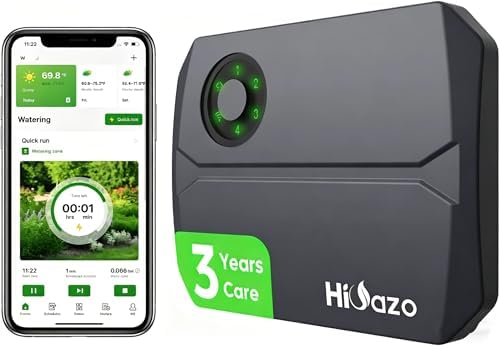
- Easy Use App Control: Take charge of your sprinkler system from anywhere with the easy-to-use Hioazo app. Access waterin…
- Weather-Smart Functionality & Save Water: Stay ahead of nature’s curve with intelligent skip features. Rain, frost, or w…
- Tailored Watering Solutions: Customize up to 16 watering plans across 4 zones, fine-tuning watering frequencies to suit …
With this overview, gardeners and outdoor living enthusiasts can assess their options and select the ideal smart irrigation controller to enhance their watering routines. Each option offers unique features suited for various garden sizes and preferences, ensuring there is a solution for every need.
Installing and Maintaining Your Smart Irrigation Controller
Pre-Installation Checklist:
✓ Check Wi-Fi signal strength at your current controller location.
✓ Count your existing zones and label each wire.
✓ Take a photo of your current wiring for reference.
✓ Determine if you need an indoor or weatherproof outdoor enclosure.
Integrating a smart irrigation controller into your garden can significantly enhance your outdoor living experience by ensuring efficient water management. To begin the installation process, start by reading the manufacturer’s manual carefully, as specific instructions may vary by model. For a more detailed walkthrough, follow our step-by-step guide to installing a smart irrigation system. Generally, the first step involves removing any existing controllers by disconnecting the power and carefully taking out the wiring connections.
Next, mount the smart irrigation controller in a location that is sheltered from direct sunlight and accessible for regular checks. This will help to protect it from extreme weather and ensure that you can easily make adjustments when necessary. Connect the irrigation controller to your water supply line and the irrigation sensors, following the provided instructions closely. Ensure the wire connections are secure, and power on the system to proceed with the setup process.
Once installed, configuring the controller through its dedicated app is crucial. It is important to program your smart sprinkler controller correctly to set up watering schedules based on your garden’s specific needs and integrate weather forecasting features. This integration helps optimize watering times and durations, thus preserving water and improving plant health.
Regular maintenance is essential to keep your smart irrigation controller functioning effectively. Check the battery levels if your model uses them, and ensure all connections are intact at least once a season. Additionally, inspect the irrigation sensors for debris or wear, as these components directly affect the controller’s performance. If your smart irrigation system is not working, consult our list of proven fixes or the troubleshooting section of your manual. By following these guidelines, you can maximize the effectiveness of your irrigation controller and ensure your outdoor living space thrives.
Frequently Asked Questions (FAQ)
Will a smart irrigation controller work with my existing sprinkler system?
Yes, most smart controllers are designed to be “plug-and-play” replacements for standard 24V controllers. As long as your system uses standard irrigation wiring, you can simply swap the old unit for a smart one. Be sure to check if your system requires a “Common Wire” (C-wire), which provides continuous power to the smart features.
How much water can I actually save with a smart controller?
According to the EPA, WaterSense certified smart irrigation controllers can save the average home nearly 7,600 gallons of water annually. By eliminating unnecessary watering during rain or high humidity, these systems often pay for themselves in water bill savings within the first two seasons.
What happens if my Wi-Fi goes out? Will my plants die?
Don’t worry—your garden is safe. Most smart irrigation controllers store your watering schedules locally on the device hardware. If the Wi-Fi connection is lost, the controller will continue to execute the last programmed schedule until the connection is restored and it can receive new weather updates.
Do I need a professional to install a smart irrigation controller?
In most cases, no. If you are comfortable with basic wiring (matching colored wires to labeled terminals), the installation is very DIY-friendly. Most homeowners can complete the physical installation and app setup in under 30 minutes. However, if you have a complex system with more than 16 zones, a professional consultation might be helpful.
Are there rebates available for buying these controllers?
Yes! Many local water utilities and municipalities offer significant rebates for homeowners who switch to EPA WaterSense certified controllers. In some areas, these rebates can cover 50% to 100% of the purchase price. You can find more information on how to access these savings through the Alliance for Water Efficiency. Check your local utility provider’s website for “Smart Irrigation Rebates” before you buy.